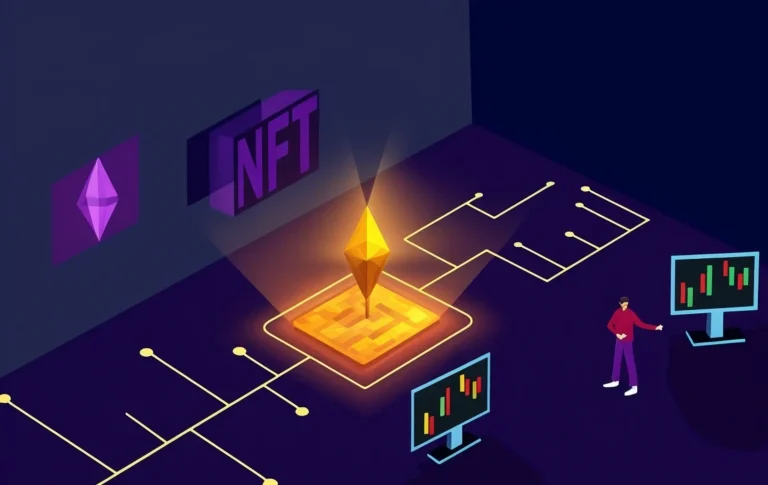
As we navigate through the current climate of economic trends, the decline of NFTs signifies a pivotal moment in the world of digital assets and speculative investments. Understanding this shift is crucial for investors and enthusiasts alike, revealing deeper insights into the crypto market’s future.
Current Value Crisis in the NFT Market
The current value crisis in the NFT market is dramatic and sobering. Reports indicate that 95% of NFT collections now hold no value; this underscores a staggering loss in an asset class that once promised explosive returns. The perception of NFTs has shifted from a status symbol to something akin to a digital relic.
Popular collections like the Bored Ape Yacht Club have seen their values plummet, estimated to be down 97% from their all-time high. Similarly, CryptoPunks, once hailed as a pioneer in the NFT space, are down 89%, which has left many investors feeling disillusioned about the prospects of their investments. As noted in recent reports, this decline raises questions about the viability of NFTs as a commodity in the long term.
The Role of Celebrity Influence on NFTs
Celebrity endorsements initially propelled NFTs into the limelight, creating a sense of urgency and exclusivity around digital assets. However, as trends evolved, the influence of celebrity culture began to wane. When high-profile individuals started dropping their associations with certain projects, consumer sentiment shifted considerably.
This shift leads to a critical examination of whether NFTs can sustain their value without celebrity backing. Enthusiasts once flocked to purchase items promoted by stars, but as interest dwindles, many are left wondering if these digital assets ever had intrinsic value. Insights from industry experts reveal that the emotional and cultural factors tied to these assets often hinge on the celebrity’s involvement, which is increasingly unstable. As one analyst pointed out, the rapid evaporation of interest highlights just how precarious the NFT market can be.
Exploring Economic Trends Affecting Digital Assets
Several economic trends contribute to the ongoing decline of NFTs. Fluctuations in the global economy have pushed speculative investments into reconsideration. Investors, once driven by the potential for high returns, are now faced with a more cautious approach to digital assets, spurred by recessionary fears.
Consequences ripple through the broader crypto market, affecting not just NFTs but also cryptocurrencies and blockchain technologies. Industry experts suggest that these downturns will drive a reevaluation of digital assets, forcing investors to reconsider their investment strategies and look for sustainable opportunities. Predictions indicate that the long-term impact on NFTs could lead to a serious consolidation of projects, weeding out those lacking a robust foundation or real-world application.

The Rise of Alternative Investments
With the decline of NFTs, alternative investments are gaining traction, and prediction markets are at the forefront of this shift. Unlike NFTs, these markets offer a more straightforward and potentially profitable avenue for speculative investment. The landscape is changing: platforms like Polymarket and Kalshi are capitalizing on the crypto market’s decline by attracting a new generation of investors seeking simplicity in financial speculation.
This trend appears to resonate particularly with Gen Z, who are gravitating toward these markets due to their uncomplicated frameworks compared to NFT trading. Analysts note that in 2025, the trading volume in prediction markets exceeded $27.9 billion, making it clear that investors are looking for alternatives amid economic uncertainty. As one Gen Z trader stated, “Crypto is so yesterday,” illustrating the generational shift toward more digestible investment strategies.
Future of Blockchain Technology Beyond NFTs
While the NFT hype may be waning, the underlying blockchain technology remains resilient. The potential applications of blockchain extend far beyond digital collectibles, raising the question of how this technology can evolve post-NFT boom. Industries such as finance, supply chain, and even healthcare are exploring blockchain’s capabilities for improved transparency and efficiency.
This evolution suggests that while NFTs may face challenges, blockchain itself will likely continue to thrive, finding new and innovative uses. Adopting blockchain for purposes other than collectibles may offer a more sustainable path for digital assets in the long run, emphasizing the importance of focusing on utility rather than speculation.
Strategies for NFT and Digital Asset Investors
In light of the market’s downturn, NFT and digital asset investors must navigate this challenging landscape carefully. Here are some actionable steps to consider:
– Conduct Thorough Research: Always assess the project background and its real-world applications before investing.
– Identify Viable Investments: Look for NFTs or digital assets that show signs of sustainability and demand, differentiating them from oversaturated collections.
– Diversify Your Portfolio: Consider branching out into alternative investments, such as prediction markets, to mitigate risk.
Understanding the factors contributing to the decline in NFTs and adapting investment strategies accordingly can help secure a more stable financial future in this tumultuous environment.
About The Author